 Image 1 of 1
Candy anyone? Over 200 tons of candy are produced every day!
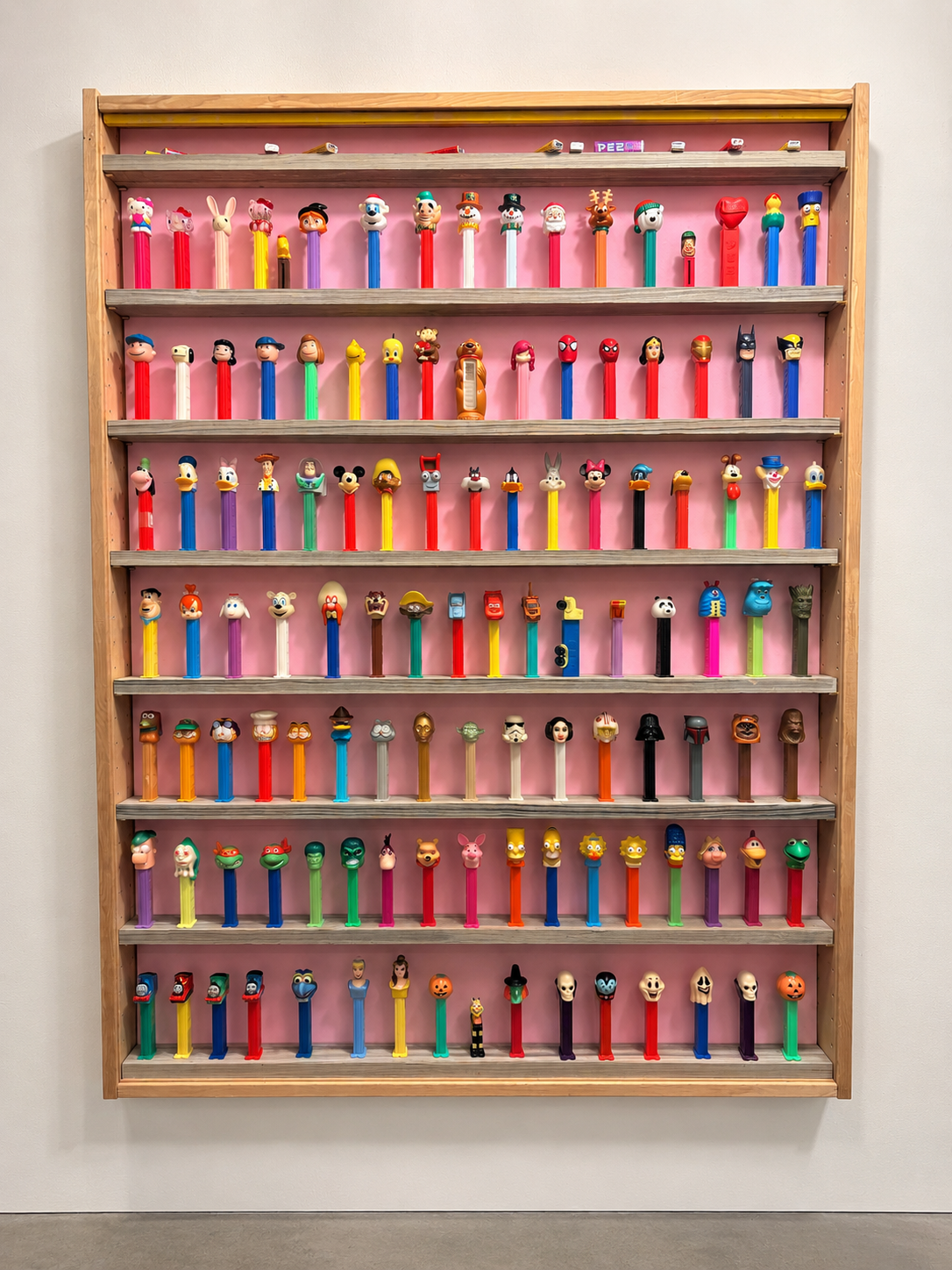
There are over 1500 basic PEZ designs however there are more than 10,000 variations. This is a great example of how you can see why a collection of something can mean many things.
PEZ began in Austria in the 1920s, and it was not originally a children’s candy at all. The name comes from the German word for peppermint, Pfefferminz, and the original product was marketed as a compressed peppermint breath mint and even as an alternative to smoking.
The great transformation came later. In the 1950s, PEZ shifted toward the American children’s market and began putting character heads on the dispensers. That decision turned a simple candy package into one of the most recognizable collectibles in the world.
What makes PEZ fascinating is that the dispenser became a tiny stage for popular culture. Characters that began in comic strips, comic books, cartoons, television, movies, holiday traditions, and advertising were suddenly turned into something a child could hold in one hand and carry in a pocket.
You can trace generations of American entertainment through PEZ: Mickey Mouse, Donald Duck, superheroes, Star Wars characters, Disney princesses, Peanuts, Looney Tunes, holiday figures, monsters, animals, sports characters, and movie franchises. A PEZ collection becomes a miniature history of what children watched, read, and loved.
Candy itself has always been tied to nostalgia. Smell and taste are unusually powerful memory triggers, so a piece of candy can instantly bring someone back to a movie theater, a Halloween bag, a road trip, a corner store, or childhood with friends. PEZ adds another layer because you didn’t just eat it — you played with the package.
Regardless, these stories are also for a small book to go along with the collection if it ever becomes an exhibit.
Candy anyone? Over 200 tons of candy are produced every day!
There are over 1500 basic PEZ designs however there are more than 10,000 variations. This is a great example of how you can see why a collection of something can mean many things.
PEZ began in Austria in the 1920s, and it was not originally a children’s candy at all. The name comes from the German word for peppermint, Pfefferminz, and the original product was marketed as a compressed peppermint breath mint and even as an alternative to smoking.
The great transformation came later. In the 1950s, PEZ shifted toward the American children’s market and began putting character heads on the dispensers. That decision turned a simple candy package into one of the most recognizable collectibles in the world.
What makes PEZ fascinating is that the dispenser became a tiny stage for popular culture. Characters that began in comic strips, comic books, cartoons, television, movies, holiday traditions, and advertising were suddenly turned into something a child could hold in one hand and carry in a pocket.
You can trace generations of American entertainment through PEZ: Mickey Mouse, Donald Duck, superheroes, Star Wars characters, Disney princesses, Peanuts, Looney Tunes, holiday figures, monsters, animals, sports characters, and movie franchises. A PEZ collection becomes a miniature history of what children watched, read, and loved.
Candy itself has always been tied to nostalgia. Smell and taste are unusually powerful memory triggers, so a piece of candy can instantly bring someone back to a movie theater, a Halloween bag, a road trip, a corner store, or childhood with friends. PEZ adds another layer because you didn’t just eat it — you played with the package.
Regardless, these stories are also for a small book to go along with the collection if it ever becomes an exhibit.