 Image 1 of 1
Before Google, Yelp, Instagram, and QR codes, there was the matchbook.
For much of the 20th century, almost every hotel, restaurant, nightclub, casino, bar, bowling alley, airline, political campaign, and roadside attraction seemed to have one. They were cheap to make, easy to carry, and brilliantly effective advertising. A customer could walk out of a restaurant with the address, phone number, logo, and sometimes even a map tucked into their pocket.
At their peak, matchbooks were miniature works of commercial art. Designers squeezed typography, cartoons, photographs, slogans, menus, maps, and sales pitches onto a piece of cardboard only a couple of inches wide. Some even carried jokes, dating advice, contests, political messages, or instructions on how to order something by mail.
Then something interesting happened: smoking declined, disposable lighters took over, and matchbooks quietly began disappearing from everyday life. What had once been throwaway advertising became collectible history.
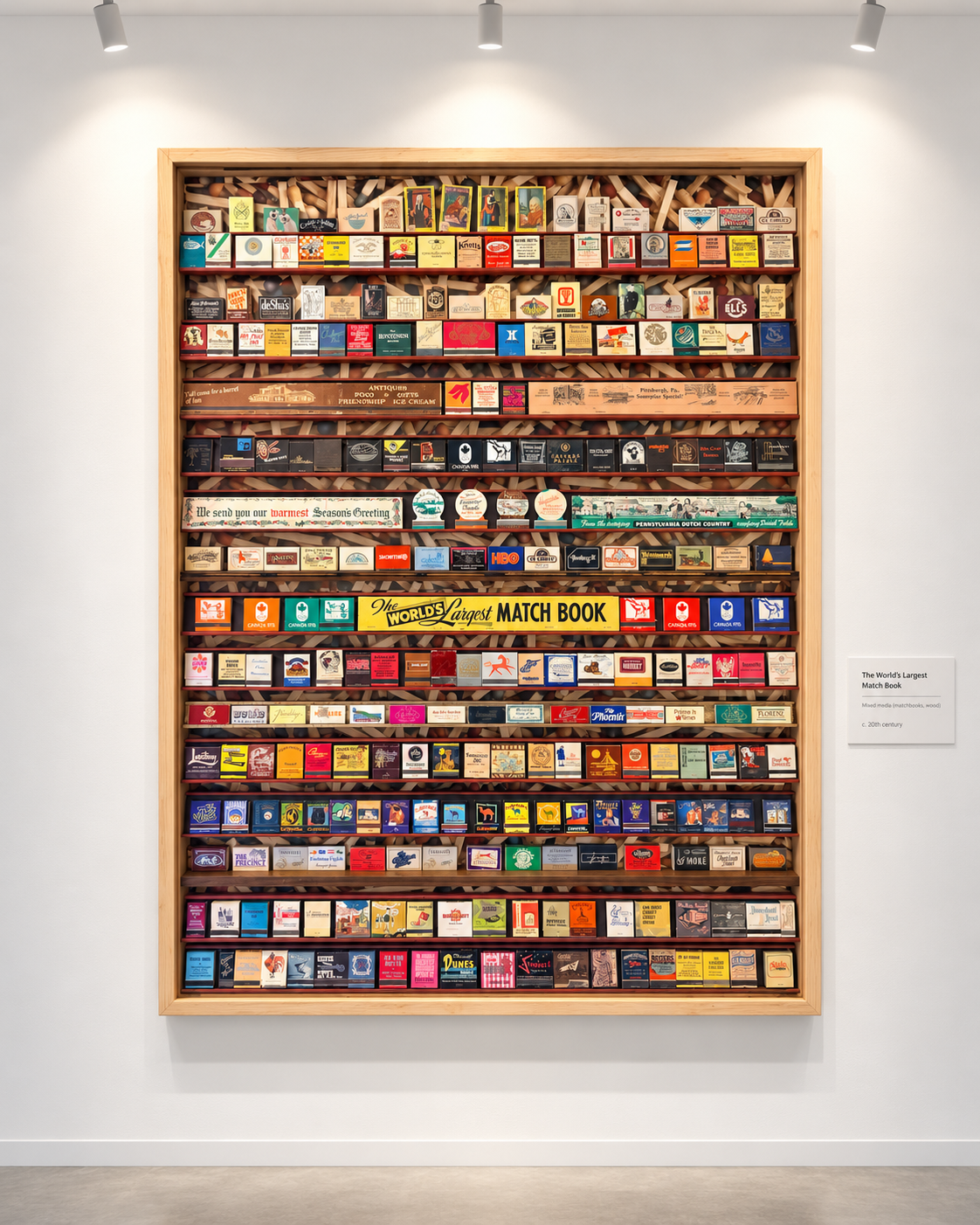
This collection preserves hundreds of those tiny time capsules—restaurants that vanished, hotels that changed names, casinos that were demolished, businesses that survived, and graphics that instantly reveal the decade they came from.
One of the most unusual pieces is the oversized “World’s Largest Match Book”—a wonderfully excessive version of an object that was designed to be small enough to disappear into your pocket.
And perhaps that is what makes matchbooks so fascinating: they were never meant to survive. They were designed to be opened, struck, burned, used up, and thrown away.
Yet here they are.
Fun fact: Collecting match-related material is called phillumeny, from words associated with “light” and “love.” A collector of matchbooks is therefore preserving something that was literally created to disappear in a flash.